

Hi there!
Today I want to talk a little bit about my recent health journey and some of the things I am learning along the way.
I feel like this is not a very easy thing to do, because there is just so much to say. I am also not a health professional, so please know that any advice on this blog is simply what I’ve learned from my own personal experience; please seek professional medical advice if you have any health concerns.
With that said, I want to start by saying, if anyone out there is currently dealing with some health issues or even a disability, know that you are not alone. It can be difficult when you have been used to living life a certain way, working towards your goals, and then suddenly everything changes. It can also be tricky navigating through the health system, finances, and the emotions of others around you. It’s ok to cry sometimes – but don’t give up. Know that just because things change, doesn’t mean you can’t still enjoy life and accomplish your goals.
Briefly, I’d like to share a little bit about my recent health journey. A little over a year ago, it started out as occasional dizziness. Thirteen months later, I have had multiple (bizarre) symptoms, including vertigo, difficulty walking, intense back pain, a small blood clot in my lungs, and much more. Although not officially diagnosed, I think it is very possible I am suffering from POTs, too. Thankfully, I didn’t have all of these symptoms at the same time; some of them came and went – for example, I rarely have had any pain lately, which is great. And I’ll have to say, while this journey has been scary at times, I am grateful for the health that I do have, as I know a lot of people are struggling with a lot worse than I am.Your diagnosis and symptoms may look a lot different than mine. But I hope, that perhaps in some small way, I can help encourage you in your journey to persevere and stay hopeful through it all.
To begin, I’d like to share a few tips which I wish I knew before starting my health journey.
What I wish I knew before starting my health journey:
- Find a good PCP (Primary Care Provider / Doctor). This is so important, at least it was for me. Even though one of the first things I did was see a PCP, apparently that person was “per diem” and I couldn’t set another appointment with them to follow-up. Not knowing exactly where to turn, I ended up going to several specialists and holistic doctors before I finally got recommended to a high quality PCP. So, to save time and energy, I would recommend finding a PCP through your insurance that might work for you, and/or ask someone you trust for a recommendation. This could be family, friends, or even a specialist you already trust. Then, you can confirm if that office carries your insurance, if needed. This may seem like a small step, but typically a PCP is able to refer you to a specialist, and hopefully help point you in the right direction. I wish I had found a consistent PCP before scrambling around on my own to different doctors and clinics.. This would have saved me a lot of time and money.
- Get emotional support. I know this might sound simple, but it can actually be a bit challenging especially if the people around you (family, friends, or even some doctors) don’t quite understand what you’re feeling. For example, the people closest to me (thankfully) have never had a blood clot in their lungs before, or POTs, etc., and I hope they never will. Thus, I found it helpful to participate in a support group for people with health conditions similar to mine. This helped me greatly, as I was able to share my experience and hear from others who also had experienced similar things. It was also comforting to be able to learn from others who had more experience or knowledge than I had regarding my possible diagnosis. In addition to this, it might help to talk to a trusted friend, family member, or therapist – someone who will listen and show compassion.
- Get a good night’s sleep! Especially in the beginning of my health journey, it was particularly difficult to get a good night’s sleep. However, I have found sleep to be so crucial to both my mental and physical health, which kind of affect each other. What eventually helped me was making small changes to adjust my mood and my environment so that when the time came, it was easier to fall asleep. For example, I noticed that for some reason, I was now waking up multiple times in the night. To help prevent this, one thing I did was close the door all the way the night before so it would be completely dark in my room; that way, the sun wouldn’t shine so brightly into my room and wake me up before my alarm. Another thing that helped me was practice journaling my thoughts right before bed. This particularly helped me release some of my grief or stress from the day, so that my thoughts wouldn’t keep me up at night. Finally, for some time I took a Tylenol about 20 minutes before I went to bed – so that any pain I had wouldn’t keep me awake at night. Perhaps I may write more tips about improving sleep in the future. But for now, if you struggle with sleeping well, think about what barriers might be getting in the way, and what small changes you can make that can help improve the quality of your Zzzzz’s.

- Spend money strategically, not frantically. Because I had no idea what was causing my dizziness, I honestly was very nervous in the beginning of my health journey. Because I did not start out with a consistent PCP, I ended up trying to find answers on my own. I spent thousands of dollars going to various clinics, specialists and holistic doctors without a formal diagnosis. While doing your own research can be helpful sometimes, I definitely would recommend finding a good quality PCP first (as mentioned in tip #1) to follow up with and help you get a formal diagnosis. Secondly, I often went to the hospital when it wasn’t a true, life-threatening emergency. Sometimes, it was moderately serious, but other times, I would go to the hospital and they would just tell me to go to the doctor. I learned that many times, the hospital is there to help save your life, but perhaps not always necessarily to find a diagnosis. Now, of course, this is very dependent on each person’s unique situation. So, if you feel you need to go to the hospital, please do not hesitate to go. Again, this is not medical advice, and is strictly based on my own personal health journey. I believe it is better to go and find out nothing is urgently wrong, then to avoid going when you actually need to. With that said, I am glad that in the beginning I at least got checked out, and even if it wasn’t an emergency, I had some peace in mind that I was ok.
- Use aids to make your life easier. For me, one thing that helped to make my life easier with my (possible) “POTS” symptoms was trading my larger, heavier purse for a much lighter one. This made it a lot easier to get in and out of the car, for example, when standing by itself was often a challenge. Another thing that helped me, was getting a stool that I could roll into the kitchen so I could sit and cook. This helped me a lot, especially when I had difficulty standing or walking for long periods of time. Whether it be a cane, stool, or other aids, don’t be afraid to make small changes that will make your life a little easier. (Be creative! Think outside the box – what is a potential solution to this challenge you’re facing?) Take steps to obtain the tools you need to increase your independence and further improve your health. Also, don’t worry about what other people think – just take care of yourself. And when you take a small step to make your daily life a little easier, it can also help reduce stress. At least, it did for me.

- Don’t focus all day on your symptoms. I know this can be hard, especially when symptoms are new or constantly changing. But for me, I often found myself googling or researching solutions for hours, which often caused more stress and anxiety. And although Google has a lot of information, the results I found was not always applicable to my specific situation. Thus, during the beginning of my journey, what helped me was to dedicate some time each day to do some research, and then take a break and focus on other tasks. Eventually, I felt well enough to go back to work part-time, and began to shift my focus on other activities while also paying attention to my health. As my symptoms began to stabilize and I found some answers, I did not need to research every day anymore. If your symptoms are concerning you, however, it may be helpful to write them down in a journal. This way, the next time you go to visit your doctor, you can share your notes with them.
- Set reasonable goals. This can be challenging, especially when we want to just “get well already!” For me, I found myself trying to make a lot of changes in my diet, exercise routine, water intake, sleep, emotional stress levels, etc. all at the same time. And, while some changes helped for some time, it was difficult actually “keeping” any one good habit, because I was trying to change too much at once. I am learning to take a step back, and try to focus on improving one goal at a time. Once I’ve mastered that goal/routine (or it becomes more automatic), I plan to move onto the next one. At least, this is the new approach I am trying right now, and I am hoping that it will be a lot more successful.
- Be patient. This illness, (at least for me) probably didn’t develop overnight – it was likely due to years of stress and other circumstances which affected my health. It can take time to find a proper diagnosis and to receive the proper treatment. It also takes time for the body to repair itself. So, take a deep breath, and be patient with yourself. Don’t rush it. Of course, take the necessary action and steps, within a timely basis – but if the answers aren’t coming as fast as we would like, or the healing doesn’t happen right away, just breathe – and try to get through and enjoy today. As I am waiting, something that has been very helpful to me is to pray.
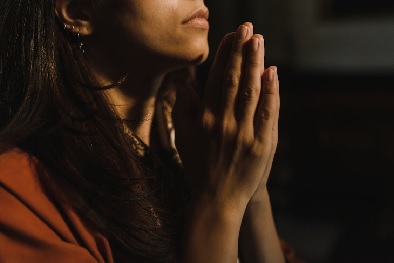
- Lean on your faith. If you believe in Jesus, like I do, I can tell you He is the best person to run to during this season of your life. I am not trying to sound “preachy” or anything – but I am honestly saying He is the one who has got me through each scary moment when no one else really knew what to do. When the doctors didn’t know what was wrong, or others didn’t know how to help, all I could do was lean on God and pray. I also asked others to pray for me, which has helped a lot too, and I am very grateful. If you don’t yet know Jesus, or are still trying to discover what faith is like for you, I would encourage you to learn more about Him. He loves you very much.
- Get additional support. This might look different for each individual, but depending on what your needs are, don’t do this alone. You may need to rest at a family member’s home for a few days or months. Or, you may need to find a small group of friends you can talk to. Or, you may need to ask for help in other ways. Some people may be more available to help than others; don’t let that discourage you. Do the best you can to take care of yourself, but also don’t hesitate to reach out for help if needed. Also, if you believe in Jesus, know that you are never alone.
Thanks for reading this post! I hope it might help in some way. Again, this is based on my experience, please do what is best for you based on your unique health situation. Got a tip that helped you get through a specific health issue? Or a story of what helped you get through a tough time? Please feel free to share below. Thanks!
Till next time,
-Sophia
Photo Credits: Special thanks for these creative photos!
Winding Road – Photo by eberhard grossgasteiger: https://www.pexels.com/photo/top-view-of-zigzag-country-road-1612461/
Lady Sleeping – Photo by Misskaren from Pixabay: https://pixabay.com/illustrations/ai-generated-woman-sleep-sleeping-8998769
Girl with Magnifying Glass – Photo by cottonbro studio from Pexels: https://www.pexels.com/photo/a-woman-looking-through-a-magnifying-glass-6491787
Lady Praying – Photo by Arina Krasnikova from Pexels: https://www.pexels.com/photo/a-person-in-orange-shirt-with-hands-together-5418299/
Butterfly in a Hand – Photo by Riccardo Vespa from Pexels: https://www.pexels.com/photo/butterfly-sitting-on-human-hand-18384987